
Nasdaq’s New High, Q3 Pullback Ahead — Why You Should Keep Investing
- Charles K

- 2025년 7월 10일
- 3분 분량
As July began, the market regained strong upward momentum. The S&P 500 has surpassed 6,260 points, and the Nasdaq has broken through previous highs, continuing its rally. With tariff suspensions, optimistic earnings expectations for tech companies, and hopes for rate cuts all converging, sentiment has clearly tilted positive. However, whether this rally can be sustained deserves a more sober look. The market is at an inflection point—transitioning from the realm of reason to one of expectation.
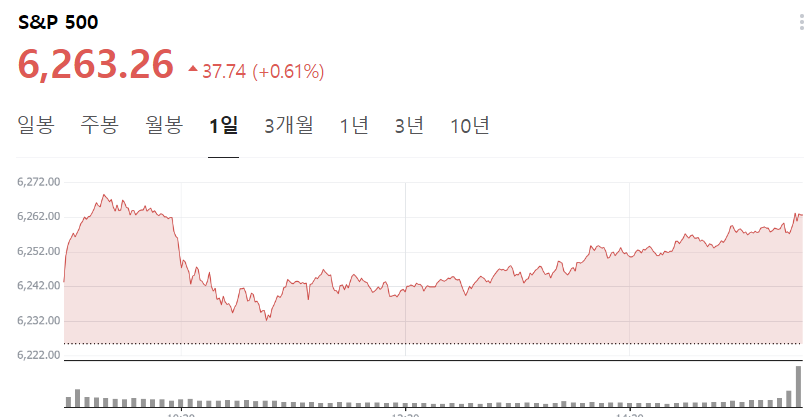
From a valuation standpoint, the S&P 500's fair value is estimated around 6,300 points. This figure assumes an EPS of $250 and applies a 25x multiple, representing the upper range of historical PER bands. The current index level of 6,260 points suggests the market is already near its valuation ceiling. Any further gains from here are likely to be driven not by earnings, but by sentiment—an overextension beyond fundamentals. Of course, markets don’t always move rationally. When optimism reaches euphoric levels, PERs can stretch to 27x or higher, making even the 6,700–7,000 range conceivable.
But before entertaining those upside scenarios, one must confront a critical variable: liquidity. On July 4, the U.S. Congress passed the BBB (Big Beautiful Bill), a sweeping tax cut package initiated by the Trump administration. With the debt ceiling battle now resolved, the Treasury Department is free to begin rebuilding the Treasury General Account (TGA).

As of July 8, the TGA holds roughly $340 billion, and the Reverse Repo (RRP) facility contains about $220 billion. However, the Treasury aims to restore the TGA to around $850 billion. That means $300–500 billion in cash needs to be absorbed from the market—a significant drain on liquidity. Once large-scale Treasury issuance begins, the market’s short-term funding environment could tighten abruptly.
History offers clear precedent. In late 2015, autumn 2019, early 2021, and mid-2023, markets pulled back whenever debt ceiling resolutions were followed by aggressive TGA rebuilding. The corrections ranged from 4% to as much as 10%, primarily due to shrinking liquidity. Markets are often more sensitive to liquidity flows than earnings, and when excess reserves decline and short-term rates rise, leveraged positions begin to unwind.
This time is likely no exception. While Treasury issuance hasn’t officially kicked off, past cycles suggest that it usually begins within 1–2 weeks of a debt ceiling deal. That places the window of volatility squarely between mid- and late July. If signs of stress emerge in short-term funding markets, high-PER growth stocks—particularly tech—may be the first to react. Structurally, a 5–10% correction is well within reason.

Yet what's more important than the correction is what follows. The market is already pricing in rate cuts from the Federal Reserve. If 2–3 rate cuts are implemented between September and December, bringing down rates by 0.5% to 1% this year, the resulting decline in real interest rates would allow valuations to re-expand. If EPS guidance also improves, the S&P 500 surpassing 7,000 becomes not just plausible, but likely.
Adding fuel to that potential rally are two key policy-driven liquidity catalysts: the legalization of the Genius Act (a U.S. stablecoin regulatory framework), and the easing of Supplementary Leverage Ratio (SLR) requirements. The former would bring short-dated government securities–backed stablecoins into the regulatory fold, injecting new liquidity pathways into both digital and traditional markets. The latter would expand bank capacity to buy Treasuries, helping stabilize long-term rates. Together, these two policy tools could ignite a new virtuous cycle in Q4: bond market stabilization → risk asset inflows → tech and growth stock outperformance.
In summary, the market is now pausing at a logical valuation ceiling. Starting in mid-July, we may see volatility driven by Treasury issuance and short-term liquidity tightening. But this pullback is not the end—it’s the setup for what comes next. As interest rates begin to fall and policy support returns, a meaningful rally may unfold heading into year-end. For long-term investors, this correction could offer a strategic entry point ahead of a structurally supportive macro shift. Now is the time to prepare, not retreat.


댓글